INSERT COIN · PLAYER ONE
Beginner Tips
This first-run guide to Galaga Wars is for players still learning the rhythm. Start by reading threats, moving deliberately and choosing useful upgrades before worrying about a high score. The sections ahead cover movement, formations, weapons, upgrades, waves, boss pressure and repeatable habits you can carry into every new run.
View Galaga Wars on Google PlayPractical guidance for learning the screen, one decision at a time.
PLAYER ONE
Four habits worth learning first
01
Keep a movement lane
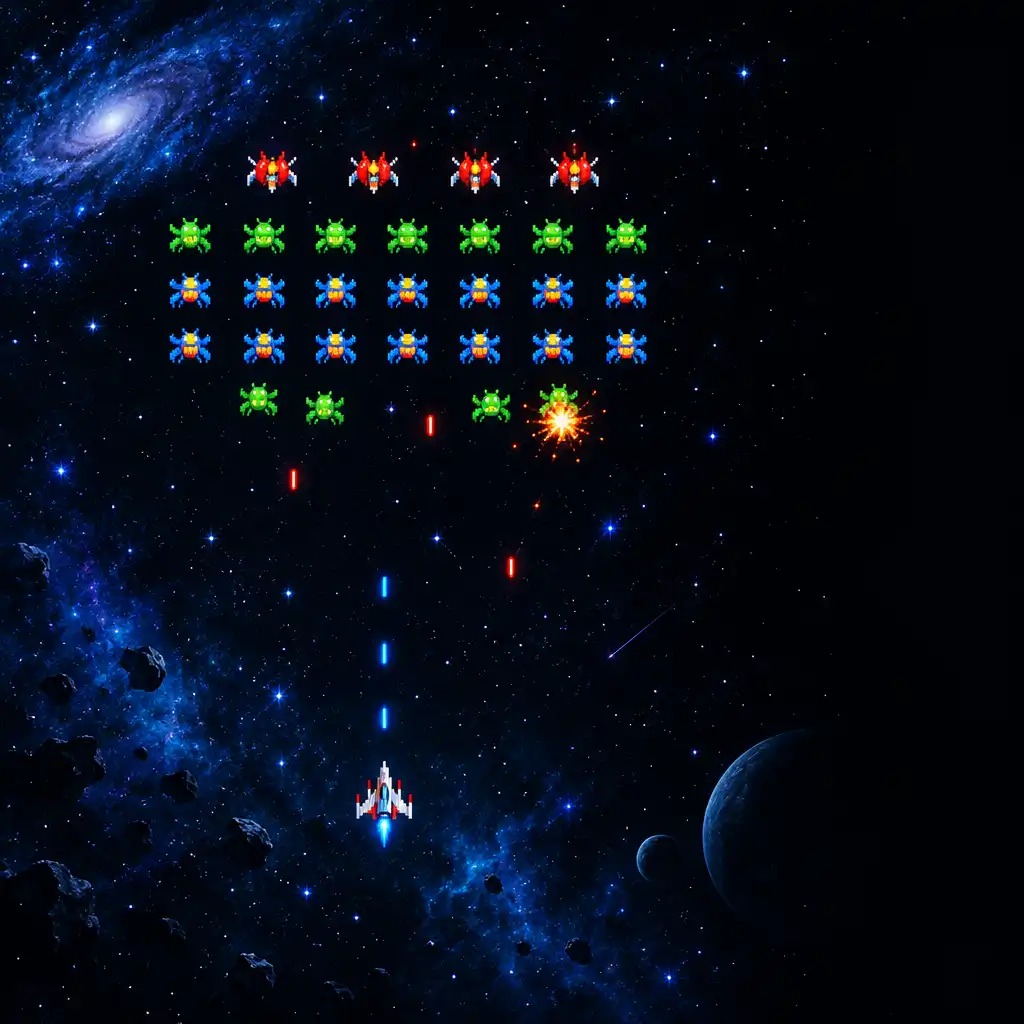
Leave yourself a clear route for dodging rather than treating every open patch as equally safe. A centred, or deliberately chosen, lane makes incoming pressure easier to read. Move with a purpose; constant drifting can hide the space you may need next.
02
Watch the formation first
Before chasing a firing position, take in where enemies are gathering and where attention may be needed next. Observation gives you a moment to anticipate pressure instead of reacting to every change only after it is already close.
03
Choose upgrades for consistency
Think of an upgrade as a tool for keeping control through a run, not simply the flashiest choice on offer. Consider the current screen and your own handling confidence, then choose something you can use with intent.
04
Treat each wave as a reset
After immediate pressure clears, reset your attention instead of carrying panic forward. Check your position, notice the available space and prepare for what changes next. That short mental reset makes the next decision more deliberate.
CONTROL
Move with a route, not a reflex
01 Begin from a readable position
Choose a starting position that leaves room to see approaching threats and adjust when the picture changes. Avoid hugging an edge without a reason if it removes your options. A useful position is not a permanently safe spot; it is a reference point that helps you see where a controlled correction could go.
02 Make short, deliberate corrections
When the screen gets busy, favour purposeful adjustments over long, uncontrolled sweeps. Smaller corrections can keep the action easier to track and leave more room for the next choice. The aim is not to freeze in place, but to make each movement answer something you have noticed.
EXIT Leave an exit before firing into pressure
Before committing attention to an immediate target, check that an escape route still exists. Converging threats can make a tempting shot feel urgent, but a clear route gives you a way to recover if the screen changes. Keep firing choices connected to where you can move next.
RADAR
Read the formation first
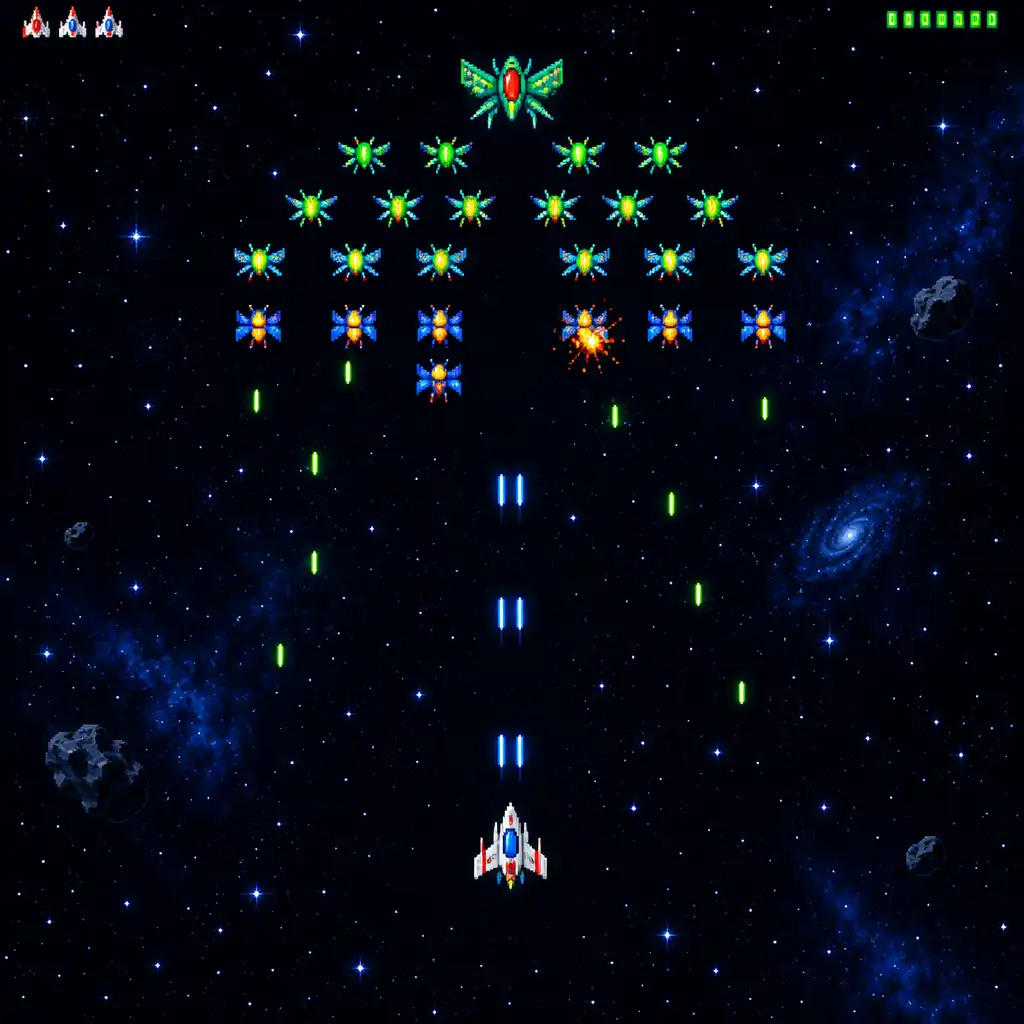
Formation shape is information. Instead of locking onto one enemy, take a moment to scan the whole arrangement and notice where your attention may be needed next. This does not predict every change, but it gives you a calmer starting point for deciding where to move and what to leave alone.
SCAN
Track the open space
Notice the room around your ship as formations alter, not only the enemies themselves. That wider view turns movement space into useful information and helps preserve the lane you chose at the start of the encounter.
READ
Recognise the direction
Give yourself a brief read-then-move rhythm. Once you can see where pressure is developing, make a controlled response rather than reacting to every animation immediately. A decision made after a scan is usually easier to follow.
RESET
Re-centre when it clears
When the picture opens up, use that moment to re-establish a useful position for the next phase. Re-centring is not a rule to follow blindly; it is a chance to regain a readable view and reset your attention.
LOADOUT
Choose for the screen in front of you
Start with control, then chase power
When you are new, a choice you can read and use confidently is often more valuable than spectacle. Test how it changes your targeting, your available space and the amount of attention it needs from you. The right decision is the one that helps you respond to the current screen while keeping the rest of the playfield in view.
Focus when a target needs attention
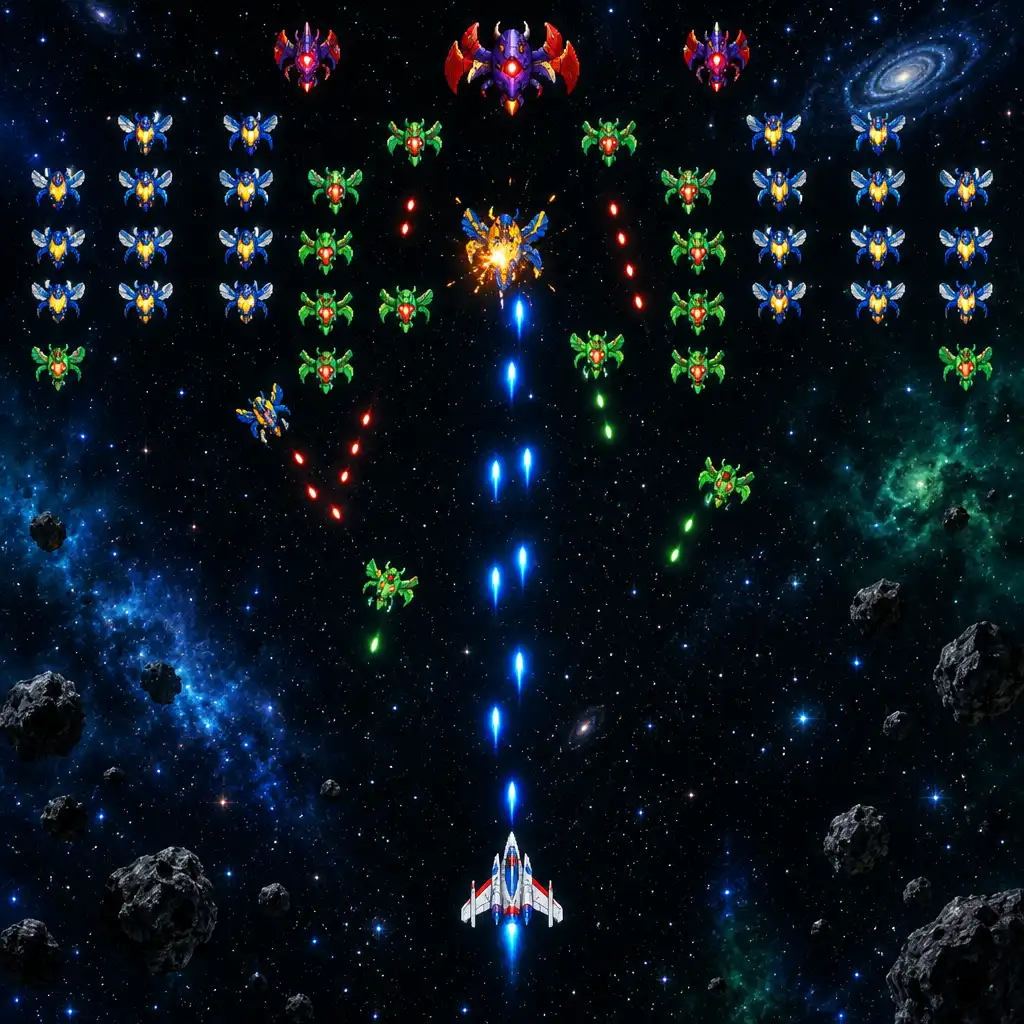
A focused option can suit a moment when one priority threat needs your attention. Keep weighing that focus against awareness of the rest of the screen, so the target does not become the only thing you are reading.
Use coverage when space feels crowded
Broader coverage may help when the screen feels crowded, provided it does not replace movement discipline. Keep watching for exits and treat coverage as support for a decision, not a reason to stop scanning.
Experiment one change at a time
Give one new choice enough attention to notice what changes in your decision-making. Ask whether it improves control or creates distraction, then make the next adjustment with a clearer reason rather than changing everything at once.
UPGRADE BAY
Choose the improvement you can use
Prioritise what improves your next decision
Favour an upgrade when it gives you clearer control, better coverage or more confidence with the immediate screen state. Its usefulness is not just how impressive it sounds; it is whether it helps you handle pressure in the next few moments with more awareness.
Do not upgrade on autopilot
Something that sounds powerful may not address the difficulty you are actually experiencing. Pause long enough to identify whether the problem is positioning, target pressure or crowding. Then choose with that specific problem in mind rather than treating every choice as automatic.
Learn the trade-off through repeat play
Early runs are useful experiments. Notice how a change affects your attention, movement and recovery, then carry that observation into the next attempt. Repeat play is where a choice becomes familiar enough to judge, without needing to promise any particular outcome.
WAVE CHECK
Reset, scan, then commit
01
Reset your position after a clear
Use a quieter moment after a cleared threat to regain a readable position instead of carrying frantic movement forward. Return to the movement-lane habit and give yourself room to see the next change arrive.
02
Scan what changed before firing freely
Take a quick look at new formation pressure and the available screen space before narrowing back into constant firing. It is a brief check within play, not a pause from play, and it gives the next action context.
03
Commit to one safe next action
Choose the next manageable action—move, target or reposition—instead of trying to solve the whole screen at once. One controlled response keeps the situation readable and gives you something practical to reassess afterwards.
RETRY
Swap panic habits for playable ones
Chasing every target
AVOID
Over-focusing on one target until the wider play area disappears from view.
TRY
Choose targets while keeping awareness of open space and developing pressure.
Staying on the edge too long
AVOID
Remaining at an edge without an intentional reason, reducing room to adjust.
TRY
Select a position with enough room to correct when the picture changes.
Changing everything at once
AVOID
Changing movement, weapon choices and priorities after one tough moment.
TRY
Test one adjustment, observe the result and learn what it changed.
Forgetting to reset after pressure
AVOID
Carrying panic into the next clear moment instead of regaining perspective.
TRY
Re-centre, scan the next change and choose one useful action.
READY
Take these five checks into your next run
CONTINUE
Learn the rhythm one run at a time
Use this guide as a repeatable routine for Galaga Wars: make space, read the formation, choose a useful tool and reset before the next challenge. Improvement does not need to arrive all at once. Each run can make one part of the screen easier to understand, giving your next decision a little more confidence.
View Galaga Wars on Google Play