
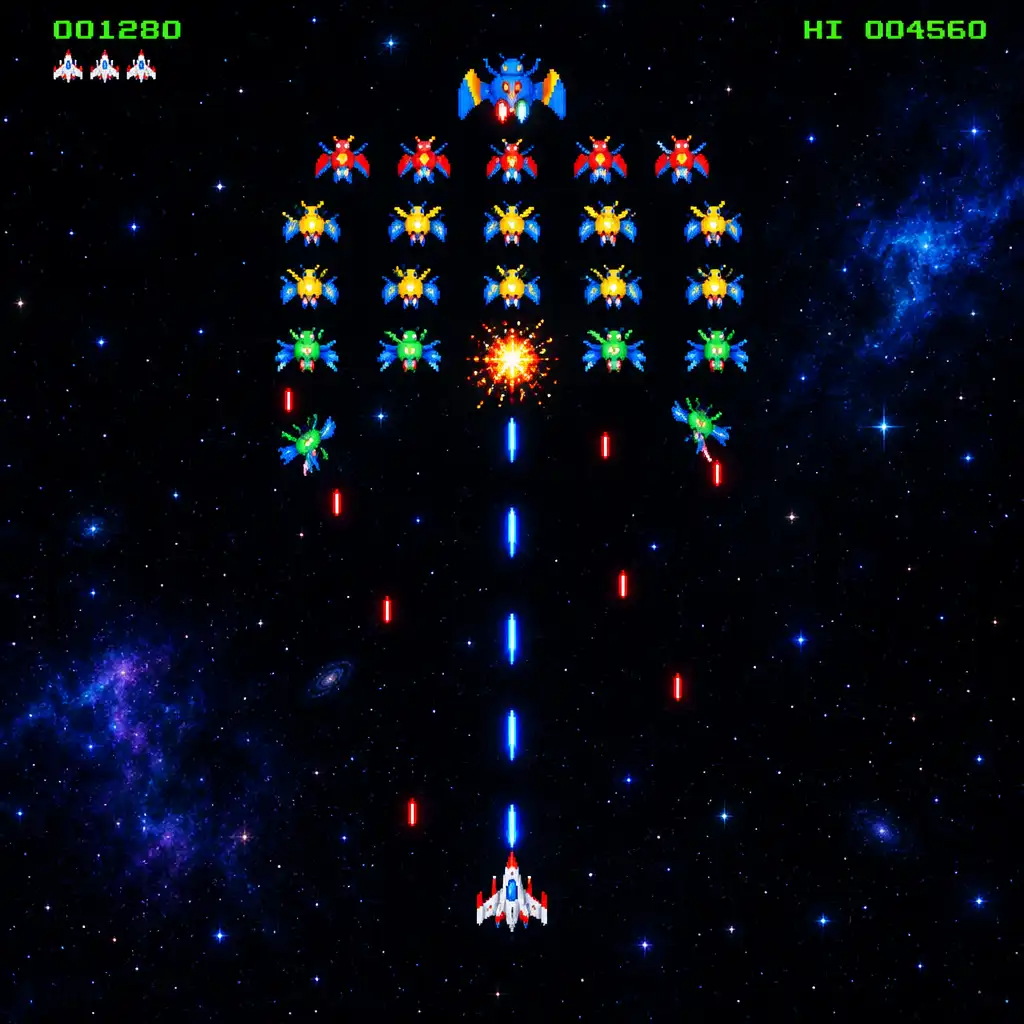
Wave anatomy
How a wave builds pressure
Routine waves become demanding when formation movement, incoming fire, and your own route through the playfield begin competing for the same space. Read the scene first, then make the smallest useful decision.
Read the formation before committing
At the start of a wave, take a brief visual read before chasing every target. Notice where enemies are entering, how the formation occupies the screen, and which lanes may soon become crowded. That first look helps connect formation shape to safe movement space and shot timing. A target may be available, but a clearer route can be more valuable than an immediate clear when the next movement pattern is still forming.
Lane status: open
Protect a movement lane
As the playfield becomes busy, survival depends on keeping a route through enemy movement and incoming fire. Use controlled lateral adjustments rather than constant sweeping across the screen. The closest target is not always the best target if firing at it leaves no escape route. Give yourself a clear side to move toward, then reassess as the formation changes.
Priority shift
Change priorities as density rises
A wave can change from collecting easy clears to managing the threats that most restrict your space or demand immediate attention. Treat that as a flexible decision, not a fixed enemy order. The important moment is when a tempting target would cost the room needed for the next response. This same discipline carries into boss arrivals, where patience and a reliable route matter more than rushing the first opening.
Wave monitor
Recognise the squeeze
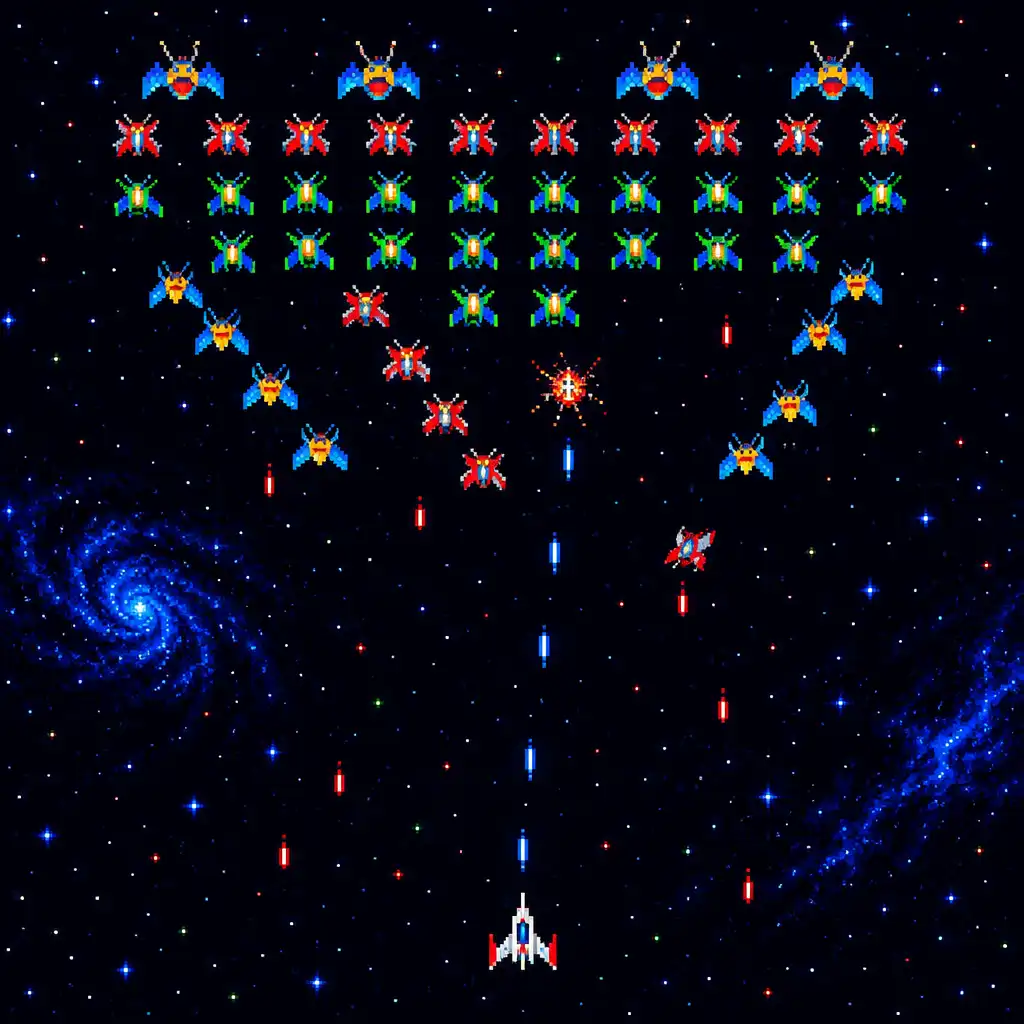
Screen-reading cues
Use this image as an observation exercise, not a fixed map of every run. Look for the space around the ship, where a formation is concentrating, and where a later move might become restricted. Crowded scenes reward a clear route more than frantic movement, especially when several visual signals compete for attention.
Keep the monitor in context
One screenshot captures one moment only. Successful play comes from continually reassessing the next opening, then carrying that calm screen-reading habit into a focused boss encounter.
Boss encounter
When the boss arrives
A boss battle changes the question from “what can I clear quickly?” to “what can I recognise, answer, and safely reset from?” The aim is controlled attention, not a hurried finish.
Reset the objective
When a boss appears, shift away from broad formation clearing and towards recognising recurring movement, preserving space, and choosing safer moments to respond. This is a mindset change: the playfield may still feel busy, but the useful task is to notice what repeats and avoid making a quick attack your only plan. Keep enough room to react after each measured response.
Watch
Watch for repeatable tells
Spend the first moments observing movement and attack cues rather than assuming the first opening is safe. A tell can be a visual sequence, a change in direction, or another repeatable shift that gives you a reason to move. Make short, deliberate adjustments and let the encounter reveal its rhythm before committing to a more ambitious response.
Opening
Use openings, then return to safety
Take a useful attack window, including a considered use of a weapon ability, then return to a position that preserves a response route. The value of an opening is not only what it lets you do in that instant; it is whether you can recover cleanly afterwards. Patience supports longer runs by keeping the next pattern readable.
Preparation
Prepare before the next gate
Check what helps your current problem
Upgrades and weapon choices are most useful when they connect to the challenge currently causing trouble: crowded formations, short reaction windows, or difficulty maintaining a safe lane. There is no need to assume one choice is best for every run. Notice what changes over several attempts and whether it gives you more control when pressure begins to rise.
- Name the problem before changing your approach.
- Check whether the change preserves more room to react.
Test
Practise one adjustment at a time
Change one part of the approach—positioning, target priority, or timing—so you can recognise whether it improves control. This beginner-friendly method turns a difficult run into useful practice. It also makes the guidance from the wave and boss sections easier to apply: read the pattern, try one response, then see whether the next moment becomes clearer.
Enter tough moments with room to move
The most valuable preparation is often visual and physical screen space. Before pressure changes, avoid settling into a position where every next move feels blocked. Upgrades and weapon abilities can support your plan, but moment-to-moment movement still benefits from a visible lane and a calm read of the playfield.
Boss monitor
Boss monitor and encounter notes
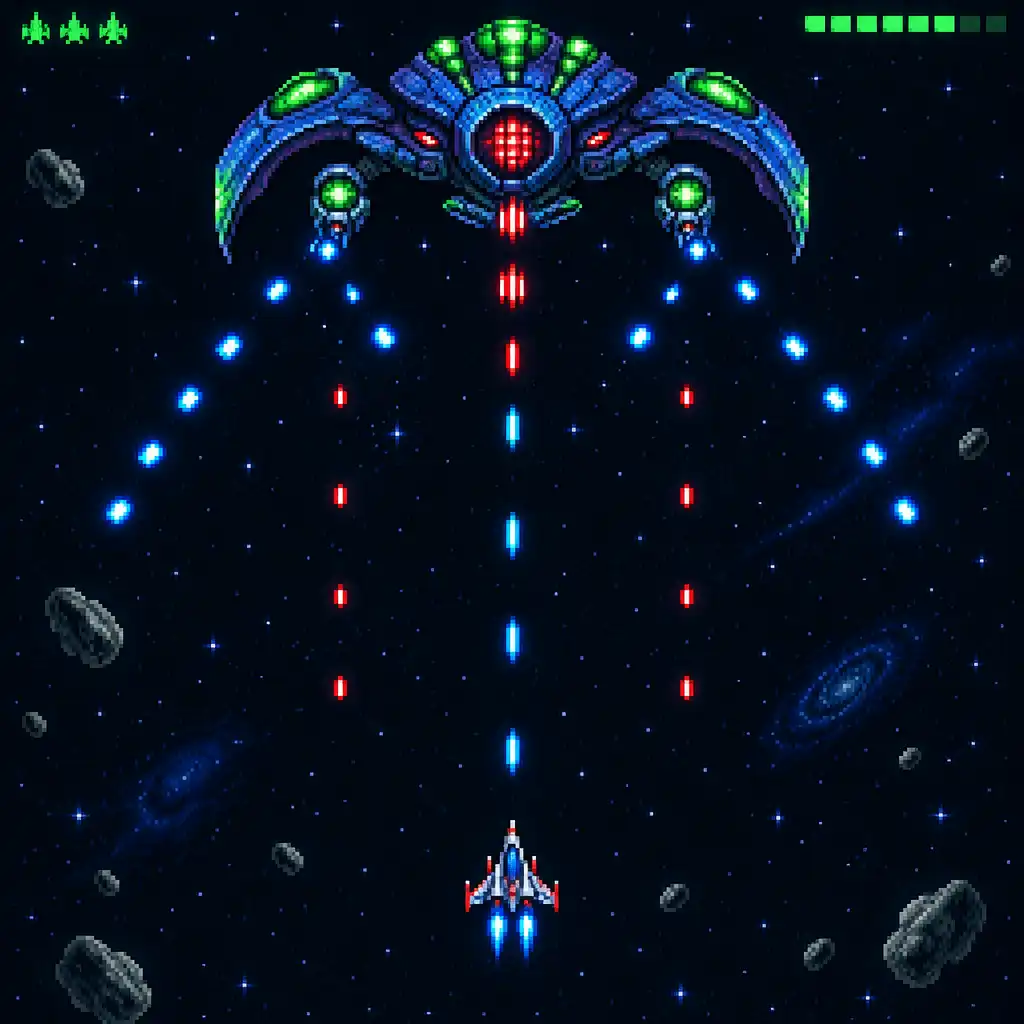
Encounter note
Look for room, not just targets
Use this framed gameplay view to notice the space around the player ship as well as the encounter above it. The image illustrates the guide’s central principle: preserve a route while responding. It does not map a fixed mechanic or guarantee the same moment in every run. Instead, practise spotting where a measured move could leave enough room for the next decision.
In a mobile-format playfield, clear visual space can be a practical cue to pause, move with purpose, and reassess rather than chase every available target.
Field guide
Survive the escalation
Step 1
Read the first pattern
Look at the formation or encounter movement before committing to a rushed path. Spotting a crowded lane early can leave more choices once the screen becomes busy.
Step 2
Keep one exit open
Prioritise a reachable movement route rather than placing the ship where every next move is blocked. Controlled movement gives the next threat room to be read.
Step 3
Spend power with purpose
Connect a weapon ability or upgrade decision to a meaningful opening or problem. A considered choice is easier to assess than one used without a clear reason.
Step 4
Reset after the opening
Return to a position that gives the next attack or wave a manageable response path. Practice makes this reset feel more natural as difficulty increases.