Loadout briefing
Ships, Weapons and Upgrades
This practical guide helps Australian players read Galaga Wars as a connected survival toolkit: movement creates space, weapons answer immediate threats, and upgrades help a run keep pace as waves and bosses raise the pressure.
View Galaga Wars on Google PlayOpens the Google Play listing.
Ship movement
The ship’s job: position before power
Make space before committing
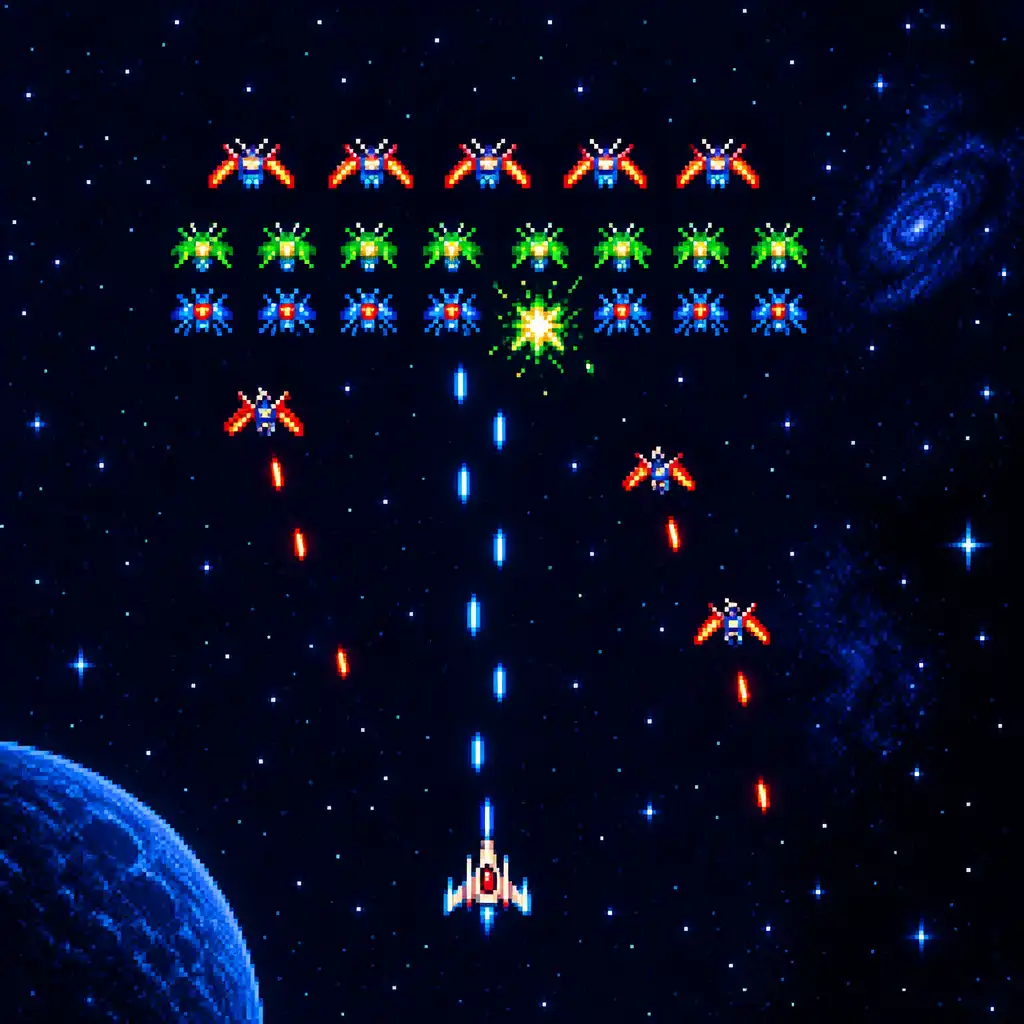
Mobile ship movement is the first defensive tool in a run. A clear lane gives you time to read an approaching formation, decide which threat matters most, and choose where your fire will do useful work. Rather than chasing every alien across the screen, aim to hold a position that leaves a response available when wave pressure starts to build.
Position
Aim for the formation’s pressure point
Position helps you meet the densest or most immediate threat instead of treating every formation as one flat target field. Watch which lanes are becoming crowded and where enemies are closing your options. A small adjustment can put your firing line against the problem that is most likely to take away your next safe route.
Pro tip
Leave a recovery route
Keep a path open for repositioning after a burst of pressure. This habit becomes more useful when the screen is busier or a boss encounter demands attention at the same time. It is not a guaranteed tactic, but it keeps movement part of the decision instead of assuming weapon strength can solve every situation.
Weapon roles
Weapon roles on the arcade screen
Weapon abilities make more sense when you judge what they solve on the current screen. First read the nearest pressure and the room you have to move; then decide whether the moment calls for attention on one target, broader lane coverage, or control that keeps the run readable.
Focused fire
A concentrated attack can be valuable when a priority target or confined threat lane needs attention. Think of it as directing pressure where it matters now, especially when a boss-focused moment asks you to keep one danger in view. It may suit a screen where a clear target matters more than spreading attention everywhere.
Wide coverage
Broader coverage can help when formations occupy more of the screen and several lanes demand attention. Its practical value is often the room it can help create: clearing enough of the field to preserve movement options. Consider coverage when the question is not only what to hit, but where to make space next.
Sustained survival pressure
A weapon’s value is also about whether it helps you keep control long enough to react, collect and reposition. A choice that supports readable movement may suit a crowded run better than one that only looks powerful in isolation. Link weapon decisions back to movement, then consider upgrades that reinforce the useful role.
Upgrade thinking
Upgrades: strengthen the run you have
Upgrade for the next problem
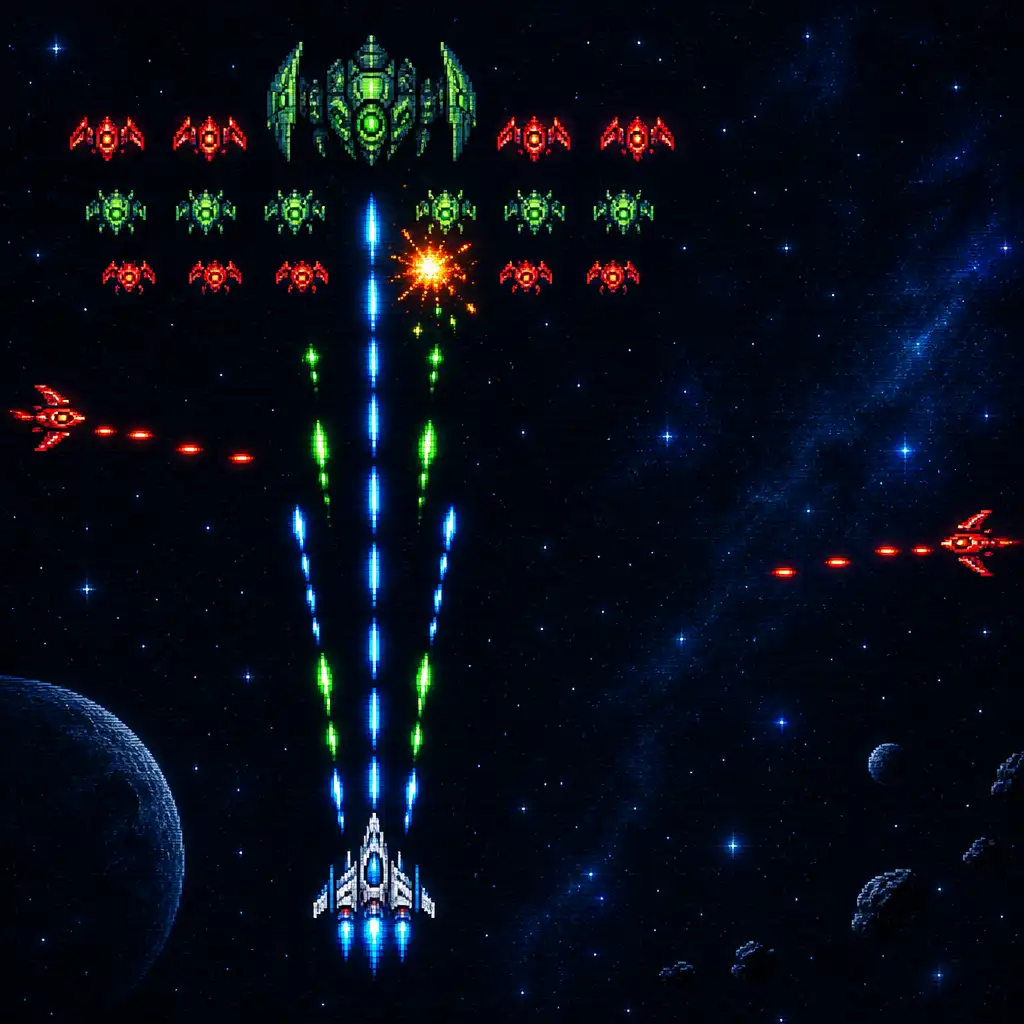
Choose improvements for the pressure that is building on screen, not simply for the appeal of a bigger-looking effect. If movement space is disappearing, ask what supports control; if one threat is taking priority, ask what supports a clear answer. This keeps upgrade choices connected to the weapon-role framework and to the changing needs of harder waves.
Match the moment
Support your strongest current role
Upgrades are easier to evaluate when they reinforce the role you are already relying on: priority damage, broader control or more dependable survival space. You do not need a fixed category list to make this useful. Notice which role is helping, then ask whether the next improvement supports that contribution.
Reassess when waves change
Think of upgrades as a recurring decision rather than a one-time answer. Later waves can change how much space and time you have to react, so revisit the formation and movement questions. A choice that felt comfortable earlier may need a fresh look when pressure becomes denser or more urgent.
Control
Keep survival in the equation
A powerful-looking upgrade is only useful if it still supports readable movement and controlled decision-making under pressure. Keep asking whether your setup leaves room to see threats, respond to a wave and stay composed when a boss becomes the immediate concern. Strength works best when it does not crowd out control.
Encounter pressure
Match your setup to formations and bosses
Formation
When formations fill multiple lanes
Broad screen pressure can make coverage and movement space especially valuable. You are deciding where to create a safe route as well as where to fire. When several lanes demand attention, return to the wide-coverage question and keep enough room to steer away from the most immediate crowding.
Wave
When wave pressure rises
Increasingly difficult waves reward the habit of reassessing whether your current setup still lets you react clearly under denser pressure. This is a useful time to revisit the role that has been helping and ask whether a further improvement supports it, or whether a new screen problem needs a different answer.
Boss
When a boss becomes the priority
Boss moments are a reason to identify the immediate priority target while protecting enough movement space to keep playing safely. Focused fire can become more relevant, but survival pressure still matters. Keep the target in mind without letting every other lane disappear from your decision-making.
Beginner path
Beginner upgrade priority path
Keep the ship readable
Start with choices that preserve your ability to see threats, move and recover rather than simply chasing spectacle. A readable screen gives a new player more chances to recognise what is happening and apply the movement-first habit. That calm foundation makes later weapon and upgrade decisions easier to judge.
Choose an answer to current pressure
Ask whether the immediate issue is a priority target, crowded lanes or too little room to reposition. Focused fire may suit the first question; broader coverage may help with the second; survival space matters in all three. Describe the problem first, then choose the role that best answers it.
Reinforce, then reassess
Strengthen what is helping in the current run, then revisit that judgement as wave pressure changes. An upgrade decision is most useful when it remains connected to what the screen is asking of you. As formations become harder to manage, check whether your setup still leaves time and space to respond.
Learn from the run
Treat each session as feedback. Notice where space disappeared, where a weapon helped, and what decision you could test differently next time. That kind of experimentation builds pattern recognition without demanding a universal starter build. For broader entry-level guidance, Read the beginner tips.
Guide approach
What this guide does not assume
No tier list
No invented tier list
A practical guide can help you assess weapon and upgrade roles without claiming one permanent ranking for every player and every screen state. Formations, wave pressure, movement space and boss moments all change the context. This page focuses on the question in front of you, not a rigid list that ignores it.
Evidence first
No unsupported numbers
This guide intentionally avoids unsourced damage, percentage, unlock and timing claims. Instead, it concentrates on observable decisions: where pressure is gathering, whether you can still move, and which role may help you regain control. That keeps the advice useful without dressing it up as false precision.
Loadout recap
What to remember in the next wave
- 01Make room to move before committing to a crowded lane.
- 02Identify the nearest pressure, whether it is a formation, wave or priority target.
- 03Choose focused fire or broader coverage for the moment in front of you.
- 04Reinforce the role that is helping you maintain control.
- 05Reassess as waves and bosses change the shape of the screen.
Ready for the next run
Take the questions into play
Carry the movement, weapon-role and upgrade-priority questions into your next session, then view Galaga Wars on Google Play when you are ready to step back into the arcade action.
View Galaga Wars on Google Play Opens the Google Play listing.